
Connecticut Old Mugshot Records
Connecticut never built a single statewide photo file. Booking photos were made by the agency that did the arresting, or by the prison that took a inmate in. So an old image can sit in a town police file, inside a State Archives series, or nowhere at all if a retention schedule allowed its destruction. Start with the time period. Then find the agency or institution most likely to hold the file. Court dockets help you pin down a case, though a docket lists names and charges, not pictures.
The State Archives points people to its History & Genealogy Unit, its collections, and its finding aids. Some material there is indexed, and some is digitized or born-digital. What you will not find is a complete run of booking photos from every town. A name search works as a lead toward a collection. It cannot promise that any image still exists.
Prison records follow a different path than local arrests. For state prisoners held from 1800 through 1903, the Archives lists a Wethersfield Prison Records index. Modern booking photos from a city or town may still rest with that local agency or a state records custodian. When you ask about a file, bring a full name, a date range, the institution, and the type of event. That detail tells the archivist where the record belongs. To map out the route, open the collections and finding-aids page.
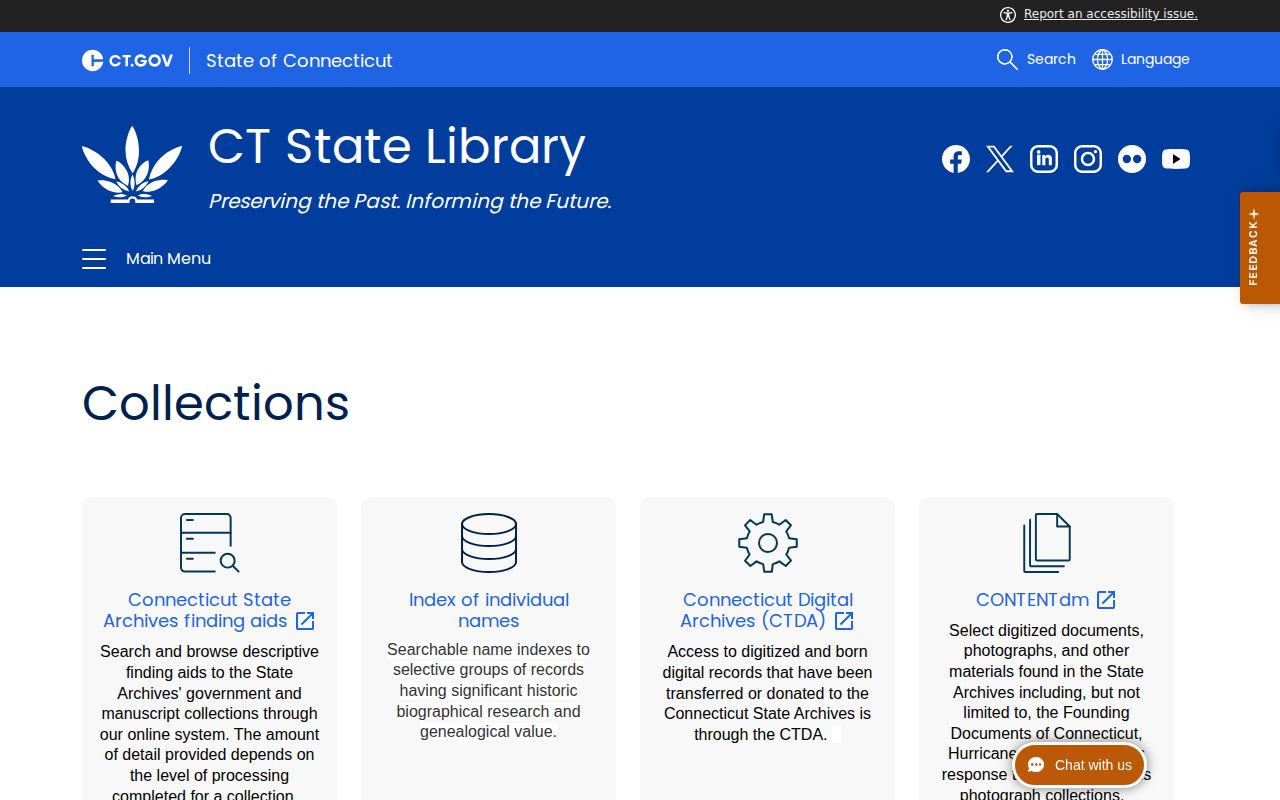
The page points to descriptive guides and digital collections. Staff still confirm whether a series holds a photograph you can access.
Connecticut Archive Collections
Every record series takes its own path. The State Archives keeps finding aids, indexes, and some digital material. Municipal records stay with the local custodian unless transferred, under state retention guidance. State agency files follow general or agency-specific schedules. DOC inmate files may face extra limits. Those files get routed through the Records Management Liaison Officer.
| Collection or Record | Where It Leads | Era or Scope | How to Start |
|---|---|---|---|
| State Archives collections and finding aids | History & Genealogy Unit, record groups, indexes, digitized and born-digital material | Selected state holdings, not a full municipal mugshot set | Search collection guides, then ask staff for the series or box |
| Wethersfield Prison Records index | Connecticut State Archives individual-name databases | Prisoner index covering 1800 to 1903 | Search the name index and request the cited archival reference |
| Municipal identification records under M7 | Municipal police or other creating agency | Photo, fingerprint, descriptor, and recording series subject to schedule terms | Ask the local custodian which version and disposition authorization apply |
| State agency general schedules | Connecticut State Library public-records schedules | State-program records by series | Match the agency and series to the current schedule |
| DOC inmate files | DOC Records Management Liaison Officer or FOI office, sometimes State Archives | Correctional records with possible criminal-justice restrictions | Ask DOC whether the request must be forwarded to Archives |
Treat these as leads, not promises. A catalog entry might describe a register or inmate file holding nothing but names, dates, and papers. No photograph has to be inside. Ask the repository to verify contents before a visit or copy request.
Connecticut Wethersfield Prison Records
The Wethersfield index is a historical tool, not a modern arrest search. The Connecticut State Archives describes it as an index to prisoners from 1800 through 1903. Search the individual-name database for a likely match. Write down the exact spelling and any reference number. The index points to a prison record. It cannot promise a booking photo waits in that file. Common names need extra care. Compare dates and other details before calling a match the right person. Then ask staff to confirm the record group, the series, and whether an image or only a written entry survives. The official Wethersfield Prison Records index interface is available here.
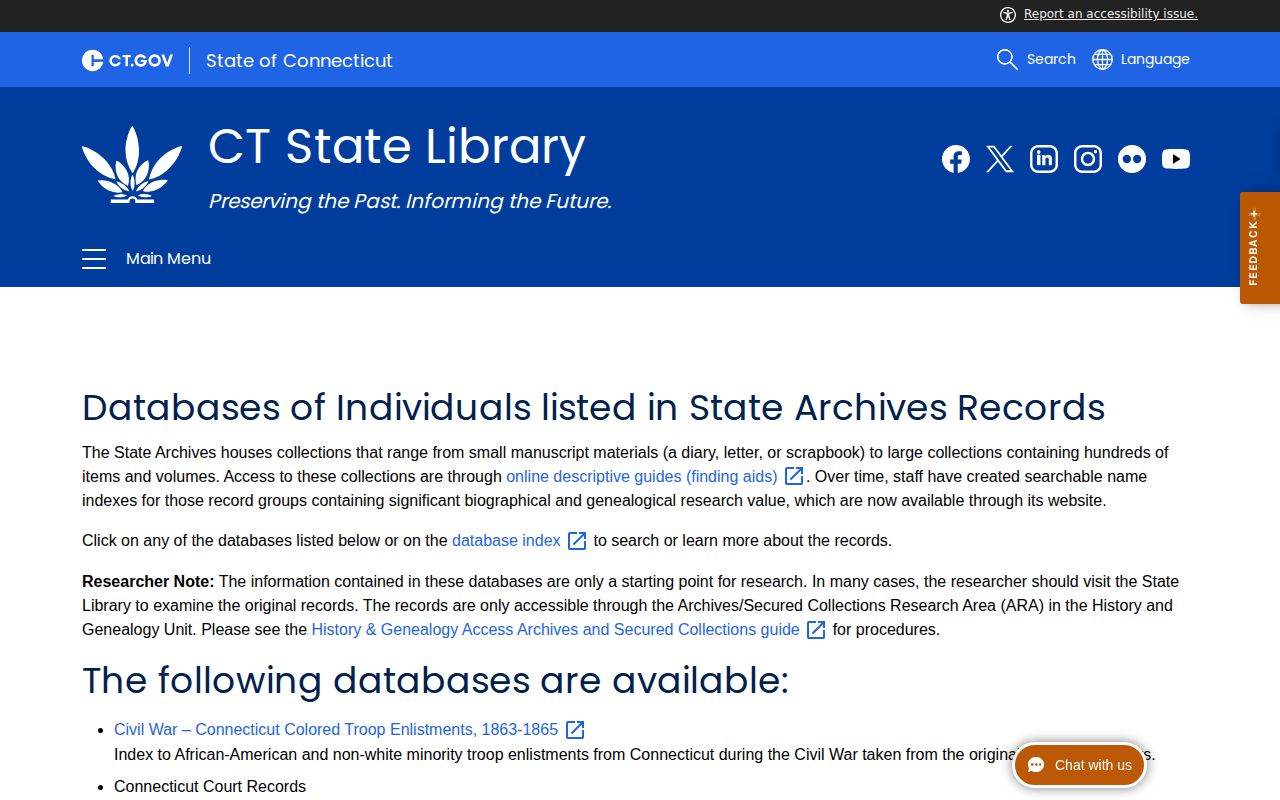
The historical index narrows a request to a known series. It is no face search, and many prison files hold no portrait at all.
Connecticut Mugshot Record Retention
Retention rules tell an office how long to keep a series and when it may be destroyed. They do not keep every photo online equally. Connecticut's municipal M7 schedule covers individual identification records. That means fingerprints, mugshots, physical descriptors, and recordings. Its minimum runs with the life of the case file. Destruction needs the required authorization. The schedule also says the Department of Public Safety keeps certain identification material for 80 years. That clause covers the named material, not every municipal mugshot. Juvenile and youthful-offender conditions get separate treatment. So do records that never reference the formal charge.
Any request about an older image should name the person, event, likely agency, and case period. Then the custodian can apply the right rule. Access can face other limits too. The State Library has described criminal-justice-information rules, erasure, medical restrictions, and other limits affecting prison-inmate files, with some requests routed through DOC. A record can sit in a drawer yet stay restricted. It can also be public but gone from the first office you call. Check the current M7 municipal general records schedule next to the State Library's state-program general schedules and agency-specific schedules. Ask which schedule version and disposition authorization apply. For that distinction, see the State Library memo on inmate-file access.
Request Connecticut Archive Records
A focused request gets better results than a broad one. Start with what is known. Gather names, dates, and the record series if possible. Then ask for the specific record or image, not a whole set of faces. Fees and turnaround vary. Each collection sets its own reproduction rules.
- Identify the likely source: municipal police, Connecticut State Police, DOC, a prison institution, or a court. Add the person’s name, approximate date, and event or case type.
- Search the State Archives collections and finding aids, then check its individual-name indexes, including Wethersfield Prison Records when the period fits.
- Contact the History & Genealogy Unit with the series, box, record group, or digital-object reference. Use current contact instructions on the official Archives page.
- For a DOC inmate file or another restricted record, ask DOC’s Records Management Liaison Officer or FOI office whether it must be sent to Archives.
- Request the specific entry or image and ask about access limits, reproduction format, fees, copyright, and timing for that series.
- If a current Archives notice says compact-shelving work has made a collection unavailable, ask staff when access resumes. A missing box is not proof that its records were destroyed.
The State Archives knows where historical state series live. The original agency may still hold local records, though. For DOC files, the official Connecticut DOC request portal gives the agency's online submission route.
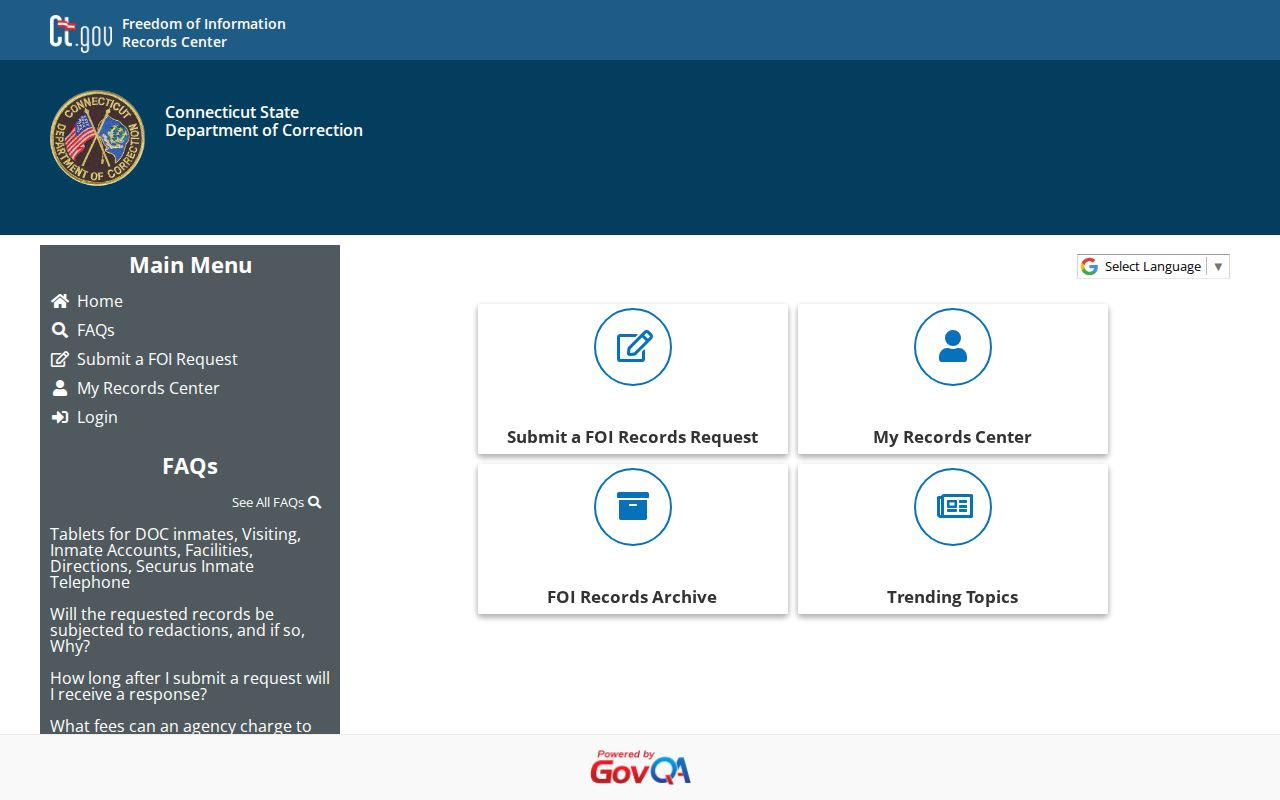
This portal is a request path, not a searchable archive. Describe the record you want, and ask whether DOC holds it or whether it should go to the State Archives.
Erasure and Old Mugshot Copies
Connecticut's Clean Slate rules and chapter 961a draw a line between an official record's legal status and copies that may have spread elsewhere. Erasure changes how covered records are treated by the state and its agencies. Copies are a separate problem. Erasure does not promise a digital photograph was technically destroyed, that a private copy disappeared, or that a search result vanishes on its own. A separate update request may still be needed.
The state's Clean Slate eligibility information and chapter 961a set out the official framework. Eligibility and agency duties turn on the case and the law. Each case is different. Never assume a public archive may release an erased record, or that an old private copy matches the current official file.
The statute text is useful for the legal framework. It will not settle one person's eligibility. For a particular matter, ask the court or agency responsible what was erased and which access rule applies.
Open the current chapter 961a text for the official wording.
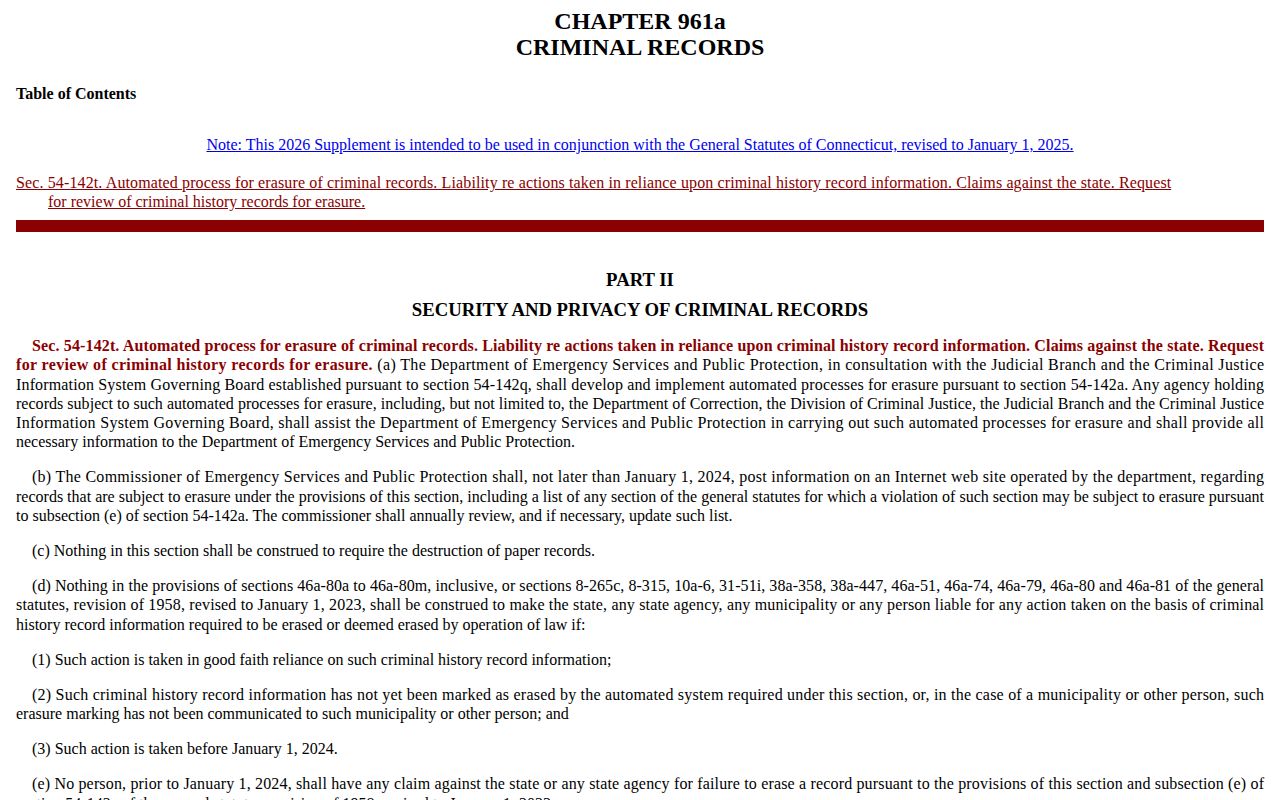
A copy held elsewhere can drift from the agency's current record. Correction and erasure questions belong with the record custodian, and with legal counsel when the stakes demand it.
Recent Arrest Records and Connecticut Archives
Recent arrest material begins with the police agency that made the booking. The court case comes next. The Judicial Branch case lookup helps trace pending criminal and motor-vehicle matters. It is not a photo archive, though. Nor can it replace the source agency's booking record. Search by the fields the current interface offers, such as defendant or docket number.
The portal may show pending charges, scheduled dates, and case status. It is a public service. It is not a clerk-certified record. Confirm entries with the clerk when same-day status matters. A docket can pin down a case number, but it cannot prove a mugshot still exists. An old municipal image may sit with the police agency rather than the court or Archives.
The Judicial Branch online information disclaimer states the rule plainly. Court data should be checked with the clerk.
For statewide routes, the Connecticut busted mugshots overview keeps three things straight: the police booking record, the court case, and DOC custody. That separation helps. When a request belongs to a specific town or county agency, the County Directory points to that local site and its current records path.
What survives is case-specific. An index entry may lead to a file. It never promises an image. Retention, archival transfer, erasure, and public access remain separate questions for the responsible custodian.
Let the record series and date guide the request. No index match? Then ask the agency whether it still holds the file, or whether it was transferred or destroyed under an approved schedule.