
Connecticut Busted Mugshots Explained
A booking photo is taken at police intake, when an agency uses one for identification. Not every agency does. The original arrest file stays with the arresting municipal department or the Connecticut State Police. From there the record splits. The Judicial Branch tracks the criminal case itself. The Connecticut State Department of Correction keeps its own custody and supervision file once someone enters that system. These records overlap in places. Still, they never merge into one statewide booking roster.
So one arrest can leave traces in three places. A police log may show the initial entry. The court docket carries the case. A DOC profile reflects custody, and an "Accused" status can simply mean the trial has not happened yet. Follow the court record to see what became of the charge.
- Booking
- Police intake that records identity and the arrest event.
- Arraignment
- A court appearance where a case moves forward and the charge is addressed.
- Disposition
- The court’s recorded outcome, such as dismissal, nolle, acquittal, or conviction.
- Nolle prosequi
- A formal notice that prosecutors will not continue with a charge.
- Erasure
- Connecticut’s legal process for removing qualifying criminal-history information from official access.
Connecticut Mugshot Law and Busted Arrest Records
Connecticut law opens a defined arrest record to the public. It stops short of making agencies post photos or run live feeds. C.G.S. § 1-215 lists the required fields: name, race, address, arrest date, time and place, and the offense. A warrant arrest also includes the application and supporting affidavit, unless a court seals part of it. Warrantless arrests follow a different rule. The record then covers the official arrest, incident, or similar report under the statute. Juvenile arrests, erased records, and investigative files stay out.
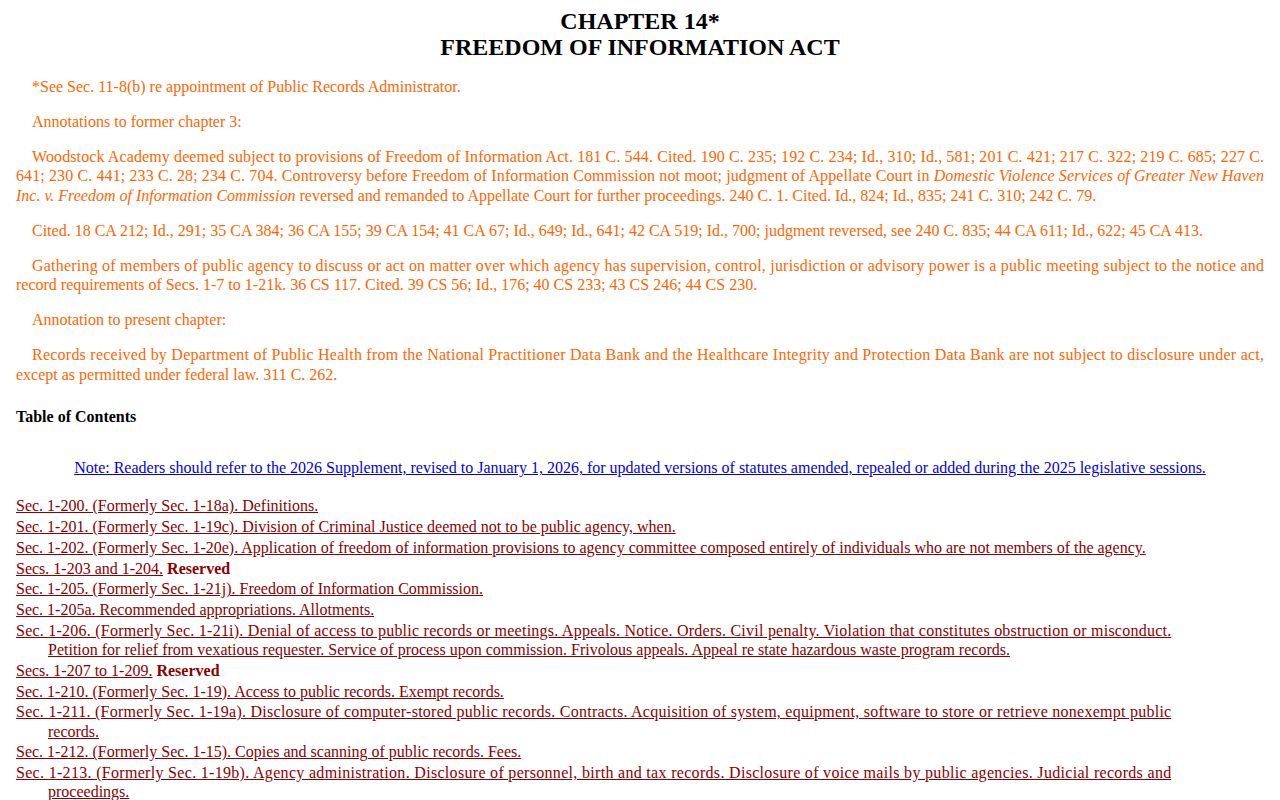
The minimum list omits the booking photo. Ask for the image on its own. The agency must then review the picture under Freedom of Information Act rules. Those rules protect sealed records, victims, witnesses, and material that could prejudice a pending case. The legislature's public-record chapter places § 1-215 beside the general access framework. Reading the two together helps. It is a statute source, though. It never promises that each town will publish a photo.
Connecticut also lacks a broad private-publishing ban. No law here guarantees a free takedown from every site, or makes a removal charge a stand-alone mugshot offense. Section 54-142e works differently. It obliges covered bulk recipients of state criminal-record data to take updates and permanently delete erased matters within 30 days of receiving erasure information. That duty is narrow. It is no universal private-photo removal law. The Second Circuit's decision in Martin v. Hearst points the same way. An accurate report from the time of arrest does not automatically become unlawful when a case is later erased.
The distinction matters. A public arrest record can coexist with limits on the image, a sealed detail, or an erased criminal-history entry.
A booking photo serves as an identifier. Turn to the court record to see whether a charge is still pending or has been resolved.
Be wary of paid deletion promises. No fee can change a court docket. Use the official record process and each publisher's documented free policies instead.
Connecticut Arrest Fields and Busted Mugshots
Connecticut has no single booking form or statewide field set. Section 1-215 sets the public floor for arrest records. Each agency's own report and intake file may hold additional fields. A photo is not on the statute's minimum list. Name it in your request rather than assuming it arrives with the report.
| Field or record | What it tells you |
|---|---|
| Name, race, address | Identity details in the statutory arrest-record definition, subject to lawful limits. |
| Date, time and place | When and where the arrest occurred. |
| Offense | The charge recorded at arrest. |
| Warrant application and affidavit | Included for a warrant arrest, except for a portion sealed by the court. |
| Official arrest or incident report | The statutory record route for a warrantless arrest, with specified redactions. |
| Booking photograph | Request it separately; access depends on the record and agency review. |
| DOC number, status, admission and location | State custody fields when a person is in DOC’s current search scope. |
| Controlling offense, sentence and release data | DOC profile information, which is not the same as a local booking receipt. |
The DOC layer works differently. A public profile can list the inmate number, name, date of birth, latest admission, location, and status. Release details and detainers can round it out. The exact display can change. A listed location may also go stale by the time a later reader opens the page.
Request a Connecticut Booking Record
Send your request to the office that holds the record. For a local arrest, that usually means the municipal police department. It could also be the Connecticut State Police troop involved. County sheriffs are not the holder here. The § 1-215 fields count as public records. Request any booking image as a separate item. Expect review under the state's disclosure rules. A focused request routes faster than a broad demand for "all mugshots."
- Identify the arresting agency, town, approximate date, and person’s full name. Add an incident or docket number if known.
- Name the exact items sought: the public arrest record, the official report, the booking or intake photo, and any nonexempt supporting record.
- Ask for responsive portions that can be separated from exempt material, and request the legal basis for any withholding.
- For a state-custody record or DOC photo, ask the DOC FOI office for its current submission route. Include the DOC number or approximate custody period when available.
- For a statewide criminal-history record, follow the separate State Police Bureau of Identification process. For the case outcome, use the Judicial Branch docket or the clerk.
Fees for booking photos fall under Connecticut's FOI rules. There is no single statewide price. Each town sets its own pace and process. Some take online forms, others want email or paper, and payment methods differ too. Before assuming a web feed is the only route, ask the record custodian about format, cost, and wait time.
For state inmates, the DOC handles things differently. Its inmate-information page spells out the search scope and gives the agency's contact route. Ask for a specific record. The office will not build a photo collection on request. One caution: custody status can shift fast, so treat what the page displays as a moment in time rather than a fixed fact.
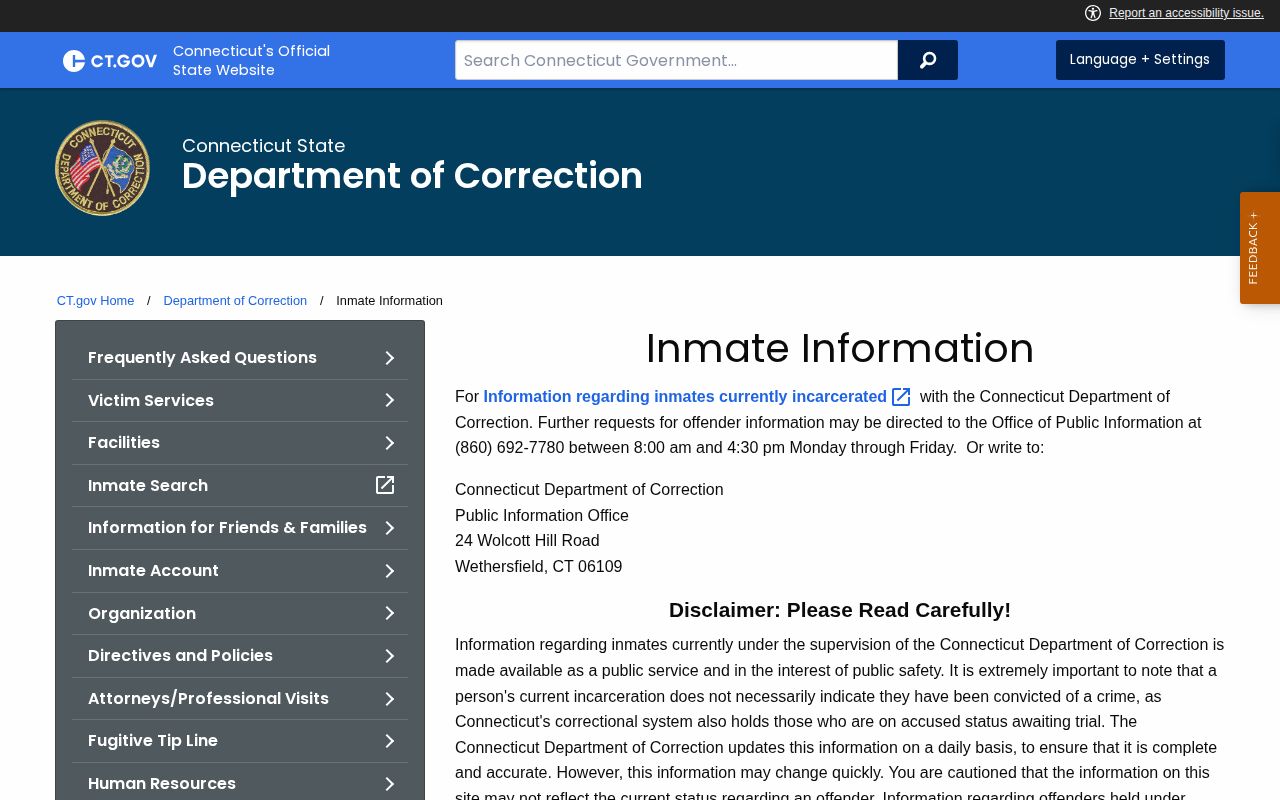
A missing result may simply fall outside the database's scope. That does not mean no arrest happened.
Connecticut Mugshot Erasure and Retention
Connecticut's main criminal-record remedy goes by the name "erasure." Dismissals, nolles, acquittals, qualifying pardons, decriminalized matters, cannabis provisions, and Clean Slate records each follow their own rules. For eligible post-2000 matters, Clean Slate sets a seven-year wait for qualifying misdemeanors. Certain lower-level felonies take ten. Both clocks run from the most recent conviction and require finished sentence terms. Exclusions apply. Older matters may need a petition. The state Clean Slate eligibility page lists the categories and explains how to ask DESPP to review a missed automatic erasure.
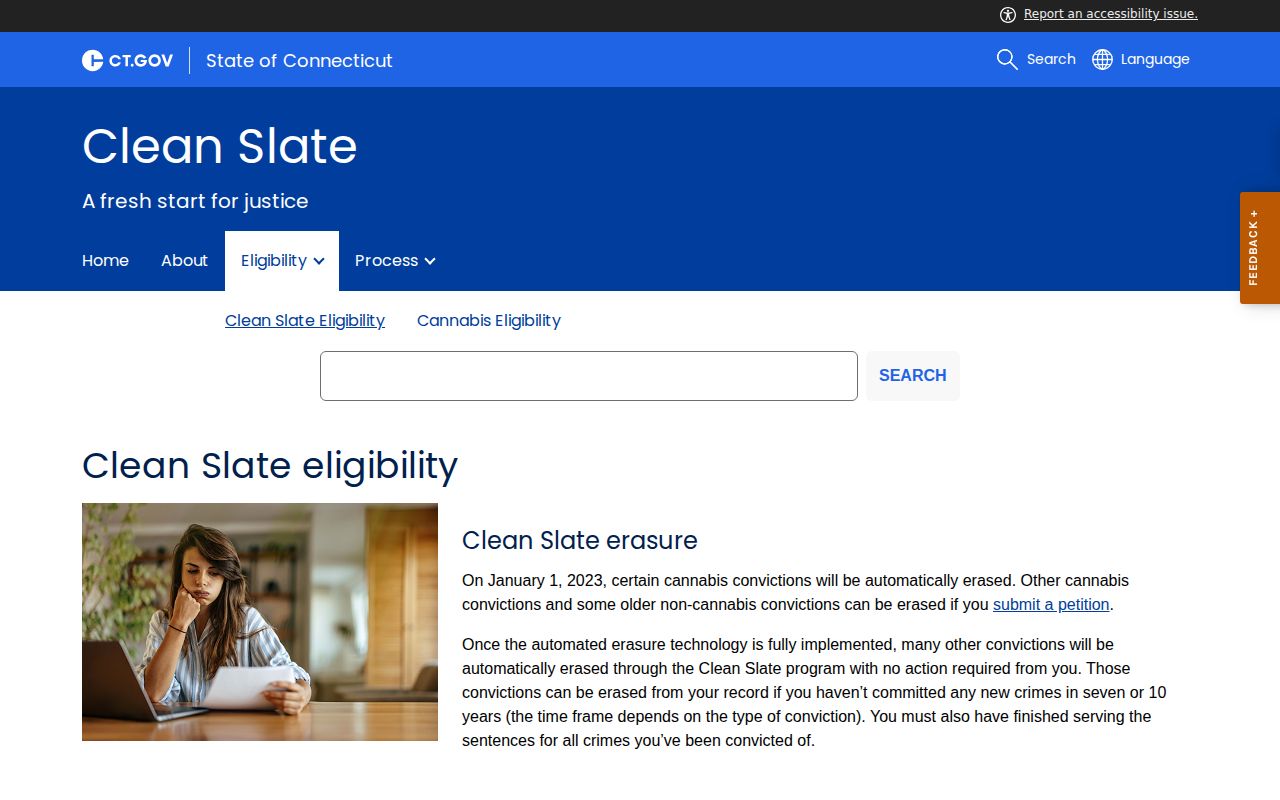
What happens after erasure? Section 54-142e requires covered bulk purchasers who receive erasure notice to update their files and permanently delete the erased record within 30 calendar days. The duty reaches specified data recipients only. It does not bind every publisher, search engine, or person who saved a photo. Section 54-142t adds that automated erasure does not destroy paper records. Official erasure is not an instant internet scrub.
Retention works on a separate track. The State Library's M7 schedule covers municipal fingerprints, mugshots, physical descriptors, and other identification material. It ties a minimum holding period to the case file and demands authorization before destruction. DPS keeps certain identification material for 80 years. None of this promises a given town still holds a particular photo, or that the photo is releasable. Online visibility, retention, and public access are three distinct questions. The schedule is a records floor, not a statewide archive. The 2026 criminal-record chapter lays out the full erasure and update system, including its paper-record limits.
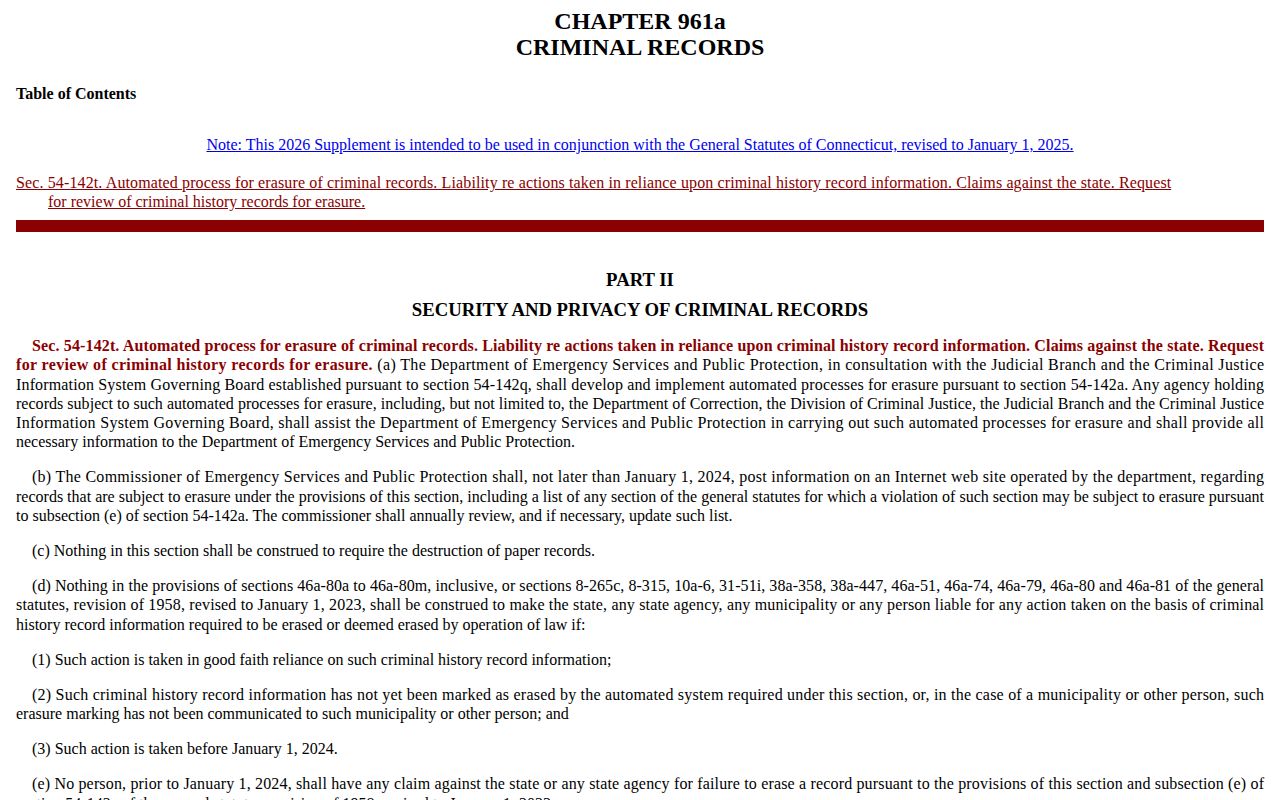
The state Clean Slate eligibility page shows the waiting-period categories and exclusions used to check whether a record may qualify.
Keep your erasure paperwork. Then contact each publisher separately through its own correction or deletion process. The Connecticut mugshot access-law deep dive covers the statute, sealing, and erasure limits in more detail.
How to Find Connecticut Busted Mugshots
Begin with the place of arrest. Connecticut's six legacy counties run no booking facilities or sheriff rosters. Local police and State Police hold the first record. Court files track the case, and CT DOC comes later as a custody layer. A short report request to the arresting town often beats a roster search. That is especially true where no public feed exists.
- Use the arrest location to identify the local police department or State Police troop. Ask that custodian for the arrest record and any photo held.
- Check the department’s own blotter, daily log, data portal or selected press releases, if it publishes one. Read the posting window and photo policy before treating an empty result as a no-arrest answer.
- If custody moved into the state system, search the official DOC interface and read its status and exclusions.
- Use the Judicial Branch criminal docket to follow a known case and verify whether it remains pending or has reached a disposition.
- If the record is not online, request it from the creating agency. For local routes, the Connecticut County Directory points to the project’s locality pages.
Does the DOC search include every new arrest? No. It tracks current DOC incarceration or supervision. That includes some accused people. Local releases, youthful-offender records, and ICE holds are left out. Someone can be booked, released, and never appear there at all.
Where Connecticut Mugshots Appear
Connecticut posts no statewide police roster. No county booking feed exists either. Search fields and photo rules vary by town. A few departments publish recurring records, yet those records answer different questions across different windows. A weekly report is not a live custody list, a prior-day dashboard can lag, and a text log may name an arrest with no photo attached.
| Channel | Photo? | Coverage and limits |
|---|---|---|
| Bridgeport monthly blotter | No routine photos in the reviewed material | Adult arrests and citations in month-based PDFs. |
| Bristol dated blotter | Text-focused | Daily-dated PDFs, without a guaranteed archive or schedule. |
| Danbury, East Hartford, New Britain reports | No routine photo field | Multi-day or weekly reporting periods, not live custody. |
| Hartford rolling log | No verified current-photo field | Arrest fields may appear, but not a full custody view. |
| Greenwich prior-day portal | No general photo promise | Refreshes around 7 a.m.; the city calls it incomplete and preliminary. |
| Norwalk daily logs | Text-only in reviewed logs | About seven days of reviewed PDFs, refreshed around 6 a.m. |
| State Police and selected local releases | Sometimes | Photo use is event-driven, not a record of every arrest. |
| CT DOC search | Profile photo when available | Current state custody or supervision, including some pretrial status. |
| RecentlyBooked Connecticut | May show a photo | Unofficial, incomplete, potentially stale legacy-county index. |
| Mugshots.com Connecticut | May show a photo | Unofficial uneven state taxonomy; counts are not official statistics. |
| Busted Newspaper, Arrests.org, Mugshots.zone | No verified CT state section found | Do not substitute another state’s page for Connecticut coverage. |
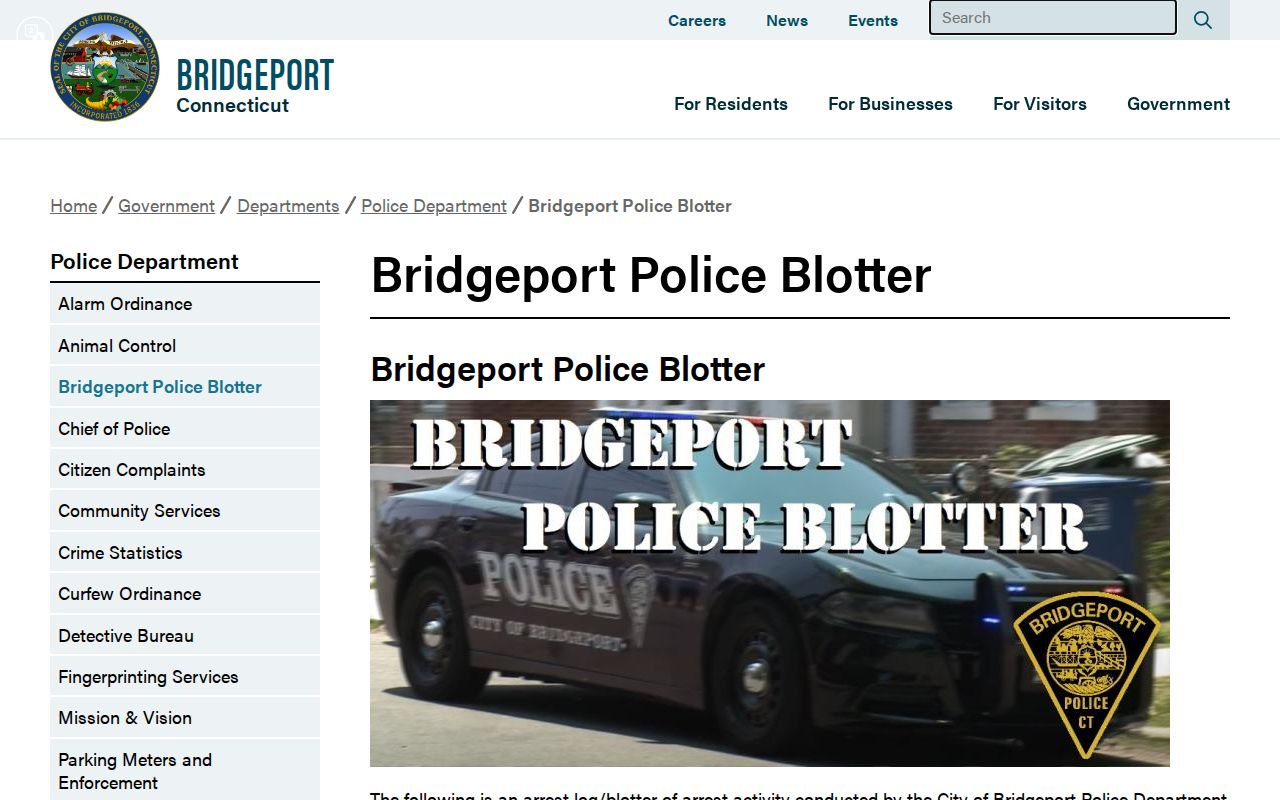
The Bridgeport Police Blotter is one official example of a text-focused local arrest publication.
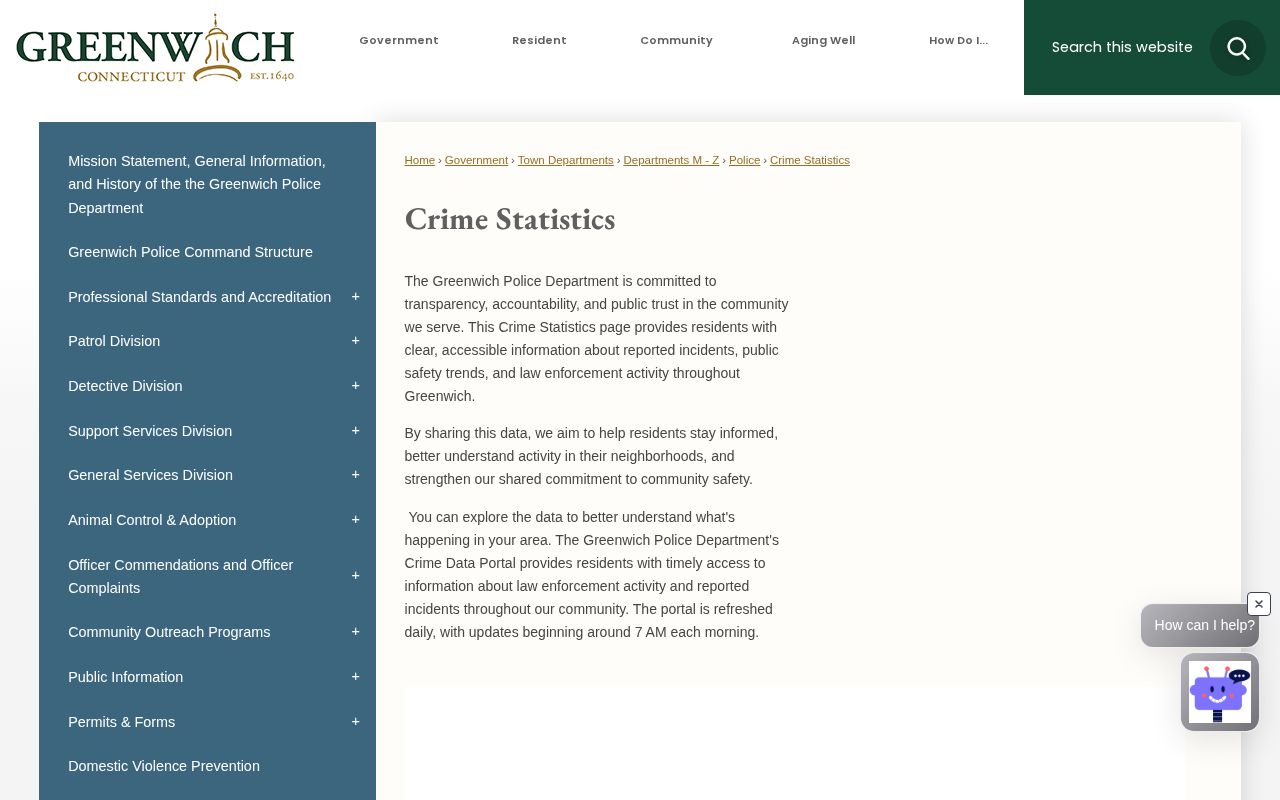
Greenwich shows the point well. The town runs a prior-day crime-data portal. It warns the data is not complete. That makes it a timely local view with a built-in limit. Its format proves why a blotter should never be mistaken for a statewide mugshot feed. The Greenwich Crime Data Portal describes that prior-day window and its preliminary status.
One local layer is not a statewide custody answer. Other departments publish weekly reports, selected press releases, or nothing searchable at all.
Do Connecticut police logs all show booking photos? No. The Bridgeport, Bristol, and Norwalk logs are text-focused. Elsewhere, a selected release may carry a photo. No town-wide photo rule applies across the state.
CT DOC Busted Mugshot Search
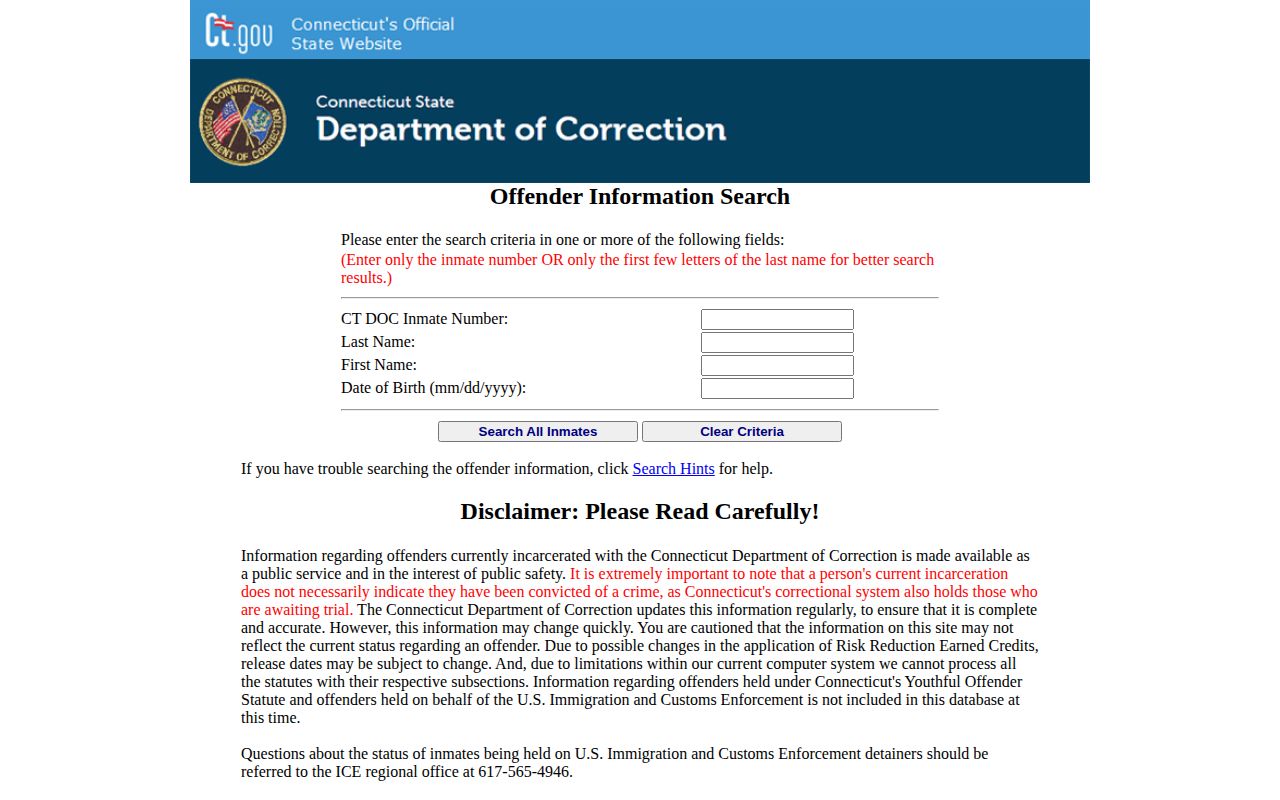
Start with the official CT DOC inmate search, which opens on a blank query form rather than a commercial mirror. Connecticut's Department of Correction runs it. The scope covers sentenced people. It also lists people marked "Accused" while awaiting trial. The public information page says records update daily and can shift fast. Two groups stay out. Youthful-offender records and ICE holds are excluded. The tool is not a statewide arrest list. It makes no promise of an archive covering former offenders. Search by DOC number if you have one. The form also accepts name details and a date of birth. Open a result and check the identity fields before trusting a match, since former-offender conviction information and other records may require a separate request under DOC policy.
If the person is not in DOC custody, stop repeating the name search. Go back to the arresting agency. A court docket or the correct federal locator often answers faster. For deeper detail, the CT DOC mugshot and offender-search page covers profile fields, photo updates, former offenders and focused records requests. It is linked in the statewide navigation and sidebar.
Connecticut Court and Federal Records
The Judicial Branch criminal case lookup shows what happened after an arrest. Search by defendant, docket or court. Results can include pending charges, scheduled dates and case status. No mugshots appear there. It is not a booking roster. The court warns that online data is a public service. Check with the clerk when a certified or current answer matters. A nightly docket view may miss a same-day change. A missing case can reflect a juvenile record, erasure, sealing or a search mismatch. It could also be a federal case. It is not proof that no arrest happened. The statewide criminal case lookup is the court-side path.
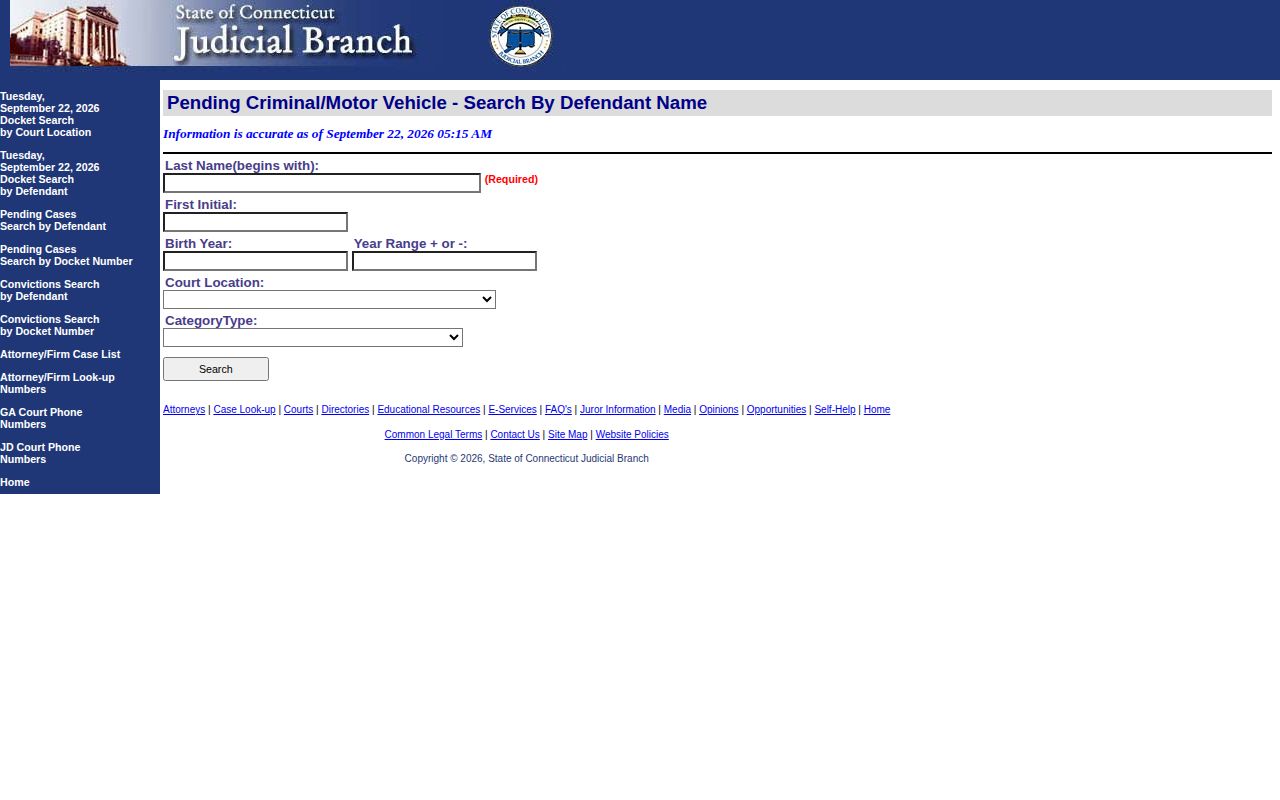
Read the docket as the case record. Ask the clerk when the online entry fails to settle a same-day question. Federal custody works differently. Use the Bureau of Prisons locator, not CT DOC. The BOP Inmate Locator shows no booking-photo field. A federal defendant may pass through a local lockup, a Marshals hold, a detention center and later BOP custody. A state search can miss that person. The ICE Online Detainee Locator serves a different custody system. It needs exact identifying details, shows no public photo, and neither tool is a Connecticut arrest feed.
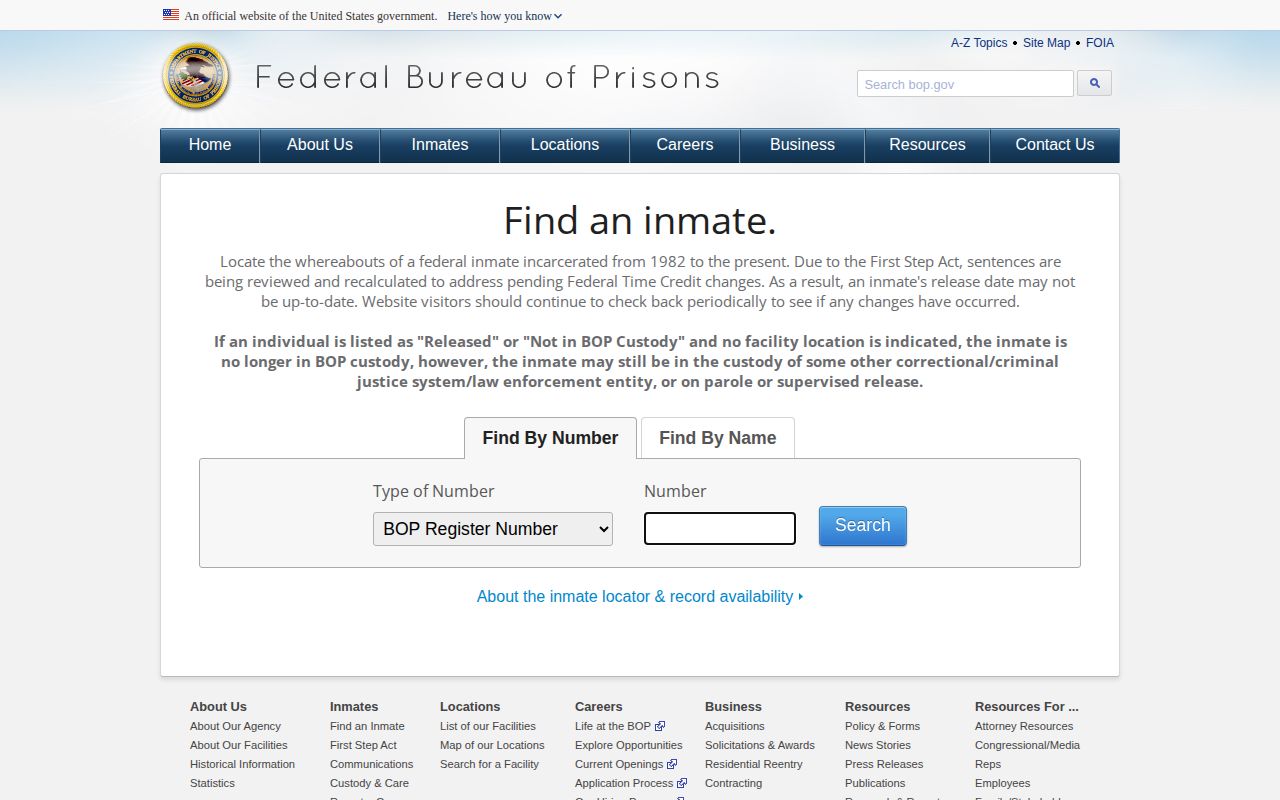
Use the right federal court or agency instead.
Where Arrest Records Move
Arrest can mean several stages. A town police record may stay available after release. A live custody list may drop the name anyway. The court docket carries the case status. If DOC admits the person, the state profile becomes the current custody or supervision source, and no single page follows every step or guarantees a photo stays visible.
| Stage | Likely record holder | What to check |
|---|---|---|
| Just arrested or booked | Municipal police or Connecticut State Police | Local log, press release, or arrest-record request; photo may not be posted. |
| Released after intake | Arresting agency and Judicial Branch | The arrest report may remain; court docket shows case status. |
| Pending case in DOC custody | DOC and Judicial Branch | DOC may show “Accused”; the docket tracks the charge and hearings. |
| Sentenced state custody | Connecticut DOC | Current profile may show location, sentence, release data and a photo. |
| Federal custody | U.S. Marshals, a federal facility or BOP | Use the federal system that matches the present stage. |
Someone released by a town after booking may never appear in the DOC search. A DOC result can lag too. Transfers and releases take time to post. Treat each screen as one agency's dated record, then confirm with the custodian that owns it.
Connecticut Busted Warrant Checks
Connecticut has no single public index of active warrants. The Office of Policy and Management publishes warrant data. Agencies supply it, and tables include monthly municipal counts plus categories like failure to appear and violation of probation. Those tables are statistics. They are not a name search or a warrant-clearance certificate. The PRAWN system stays inside law enforcement. For your own possible warrant, contact the court clerk, an attorney, or the issuing agency. Ask how to confirm the status and address it safely. DOC's Parole Fugitive Investigations Unit handles parole absconders and selected supervision cases. It is not a list of all arrest warrants. The U.S. Marshals District of Connecticut page is a task-force contact route, not a statewide roster. Never approach or follow anyone based on a listing. CT SAVIN/VINE handles victim and custody notification. CT Safe takes suspicious-activity reports. The state's DCJ resources page links victim notifications, and CT Safe accepts tips rather than roster searches. Call 911 for immediate danger; otherwise use the official agency's tip route.
Unofficial Connecticut Busted Listings
Connecticut's authoritative records sit with the police, the courts, and the Department of Correction. RecentlyBooked takes a different shape. It leans on a sheriff-and-jail model. That model does not match how Connecticut government works. The page keeps six legacy county sections that can leave listings thin or stale. The site does publish a free removal policy covering dismissed, erased, wrong-person, and duplicate listings. You must name the exact page and provide supporting proof. Approval is never guaranteed.
Mugshots.com spreads its Connecticut coverage unevenly. Its Connecticut index holds an "Unsorted" group. It offers no official count of anyone in custody. Treat it as a rough inventory of old pages. Free update and removal rules cover certain documented outcomes. Those are site policies rather than Connecticut law. Busted Newspaper, Arrests.org, and Mugshots.zone carry no Connecticut section. If a Connecticut-branded copy surfaces, check its source. Use the published free correction route instead of assuming the page is complete.
The RecentlyBooked Connecticut page displays the site's own county labels plus an access barrier. It is not a booking roster.
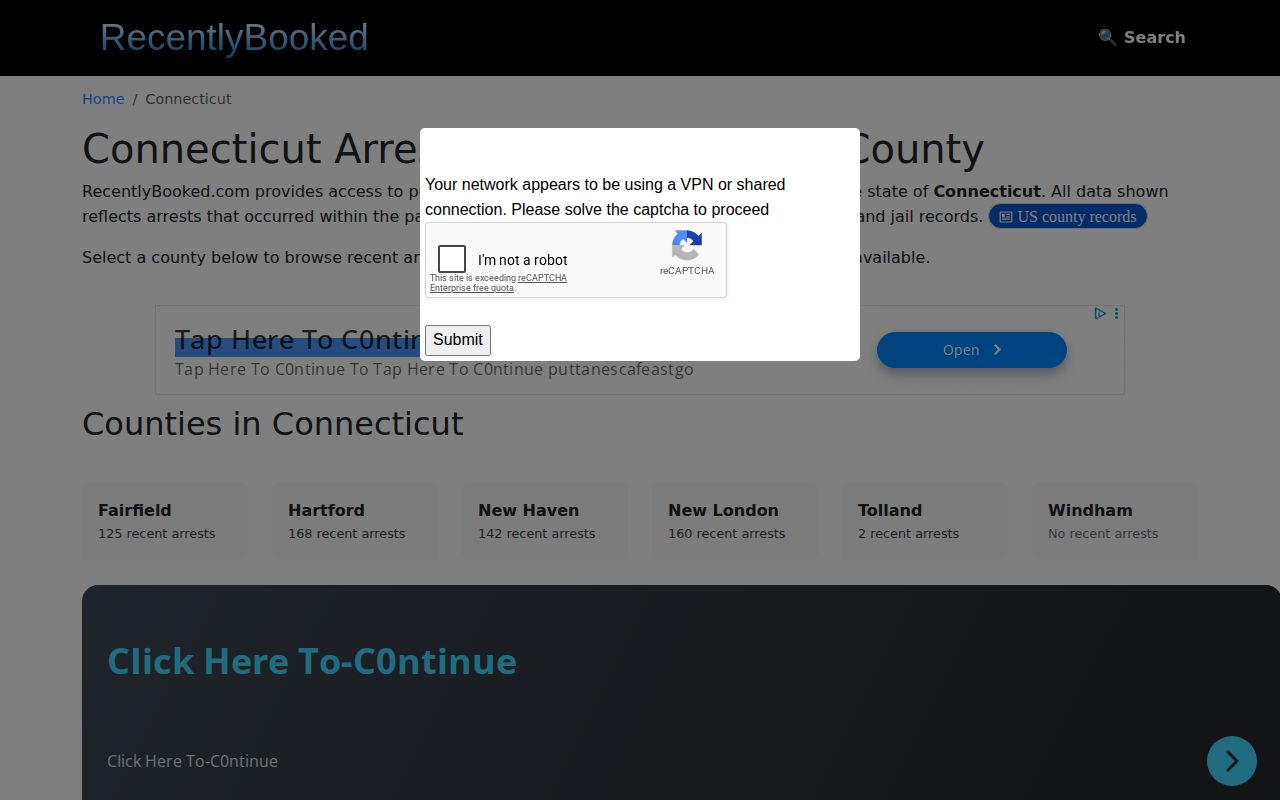
Labels on any third-party listing should be checked against the actual municipal agency. Connecticut no longer has county sheriffs or county jails. State and regional news outlets publish selected arrest stories. Photo use varies widely. Hearst Connecticut and NBC Connecticut describe correcting or updating cases one at a time. News 12 may add a verified disposition to a story. It will not remove the original story just because the case ended differently. News coverage is not a complete feed, and a courtroom or file photo is not the same as a booking photo. A stale search result can be sent through the search engine's own outdated-content process after a publisher changes its source page.